For four days, you trudged beneath a scorching sun. Your mouth was parched, your head buzzed as if a thousand bees had swarmed inside, and the hope of finding your journey’s coveted goal slipped away like sand through your fingers.
But what’s this? Before you, a city seems to rise from the earth—no, not just a city, but an entire realm: the legendary Sultanate of Naqala, the place you’ve sought at the risk of your life.
The Game Five Tribes
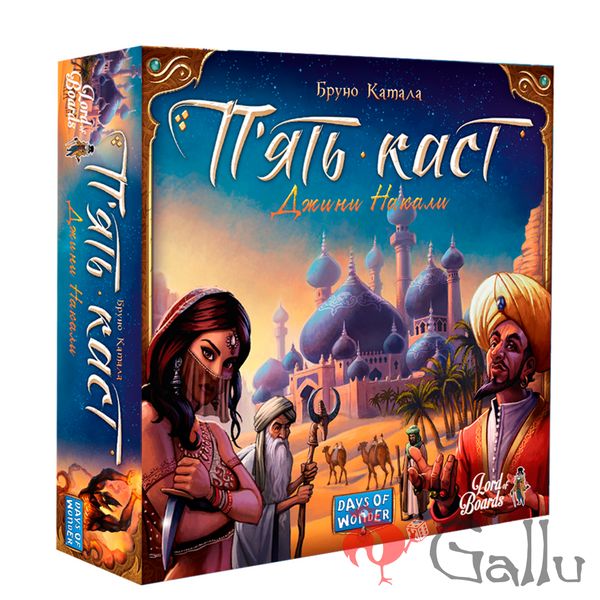
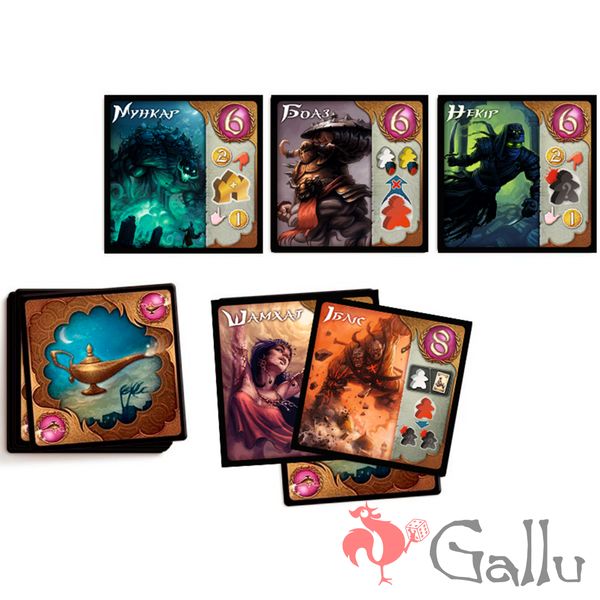
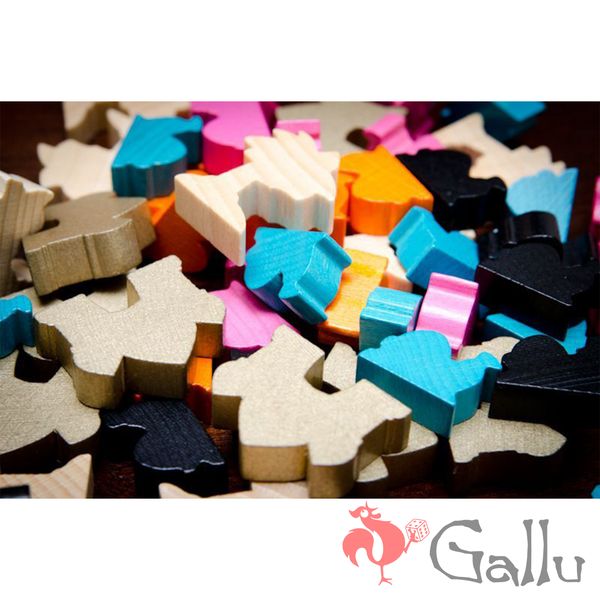
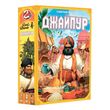
In the board game “Five Tribes,” 2 to 4 players vie for influence in the Sultanate of Naqala. To bolster your authority, you’ll claim strategic regions—marking your dominion with splendid wooden camel figures—and command five tribes: buying goods, subjugating viziers, hiring cunning assassins to thwart foes or seize key lands, and harnessing the wisdom of elders to summon ancient djinns.
Gameplay
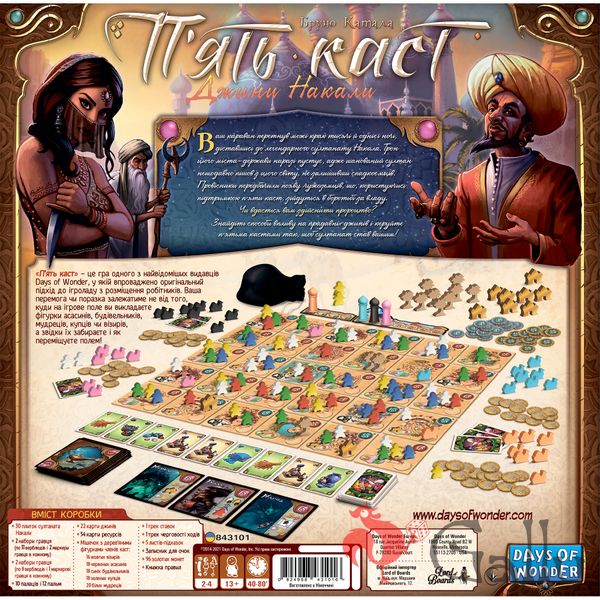
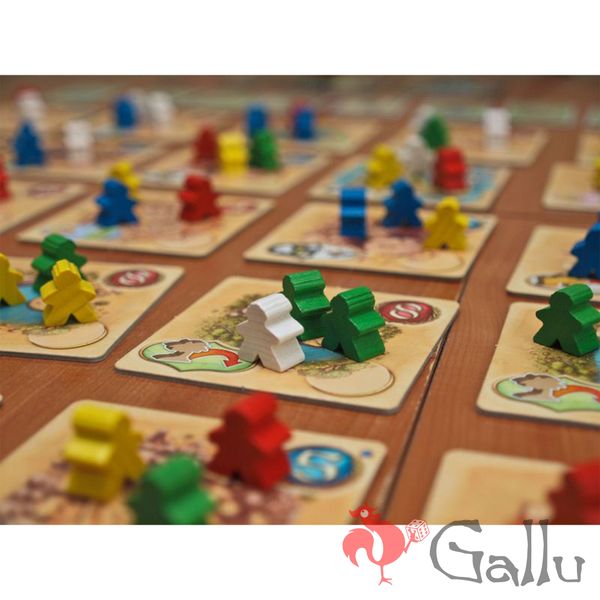
Each game begins by assembling a unique board: a 6x5 grid of region tiles forming the sultanate. Some locations let you trade at the market, others summon djinns, and some allow you to erect palaces or grow palm trees. But the designer didn’t stop at a variable board—each session unveils a fresh sultanate, with tribes (colored meeples) scattered anew. Sometimes you’ll itch to go first and snag a high-scoring tile, while other times it’s wiser to hang back and avoid the cost of moving early.
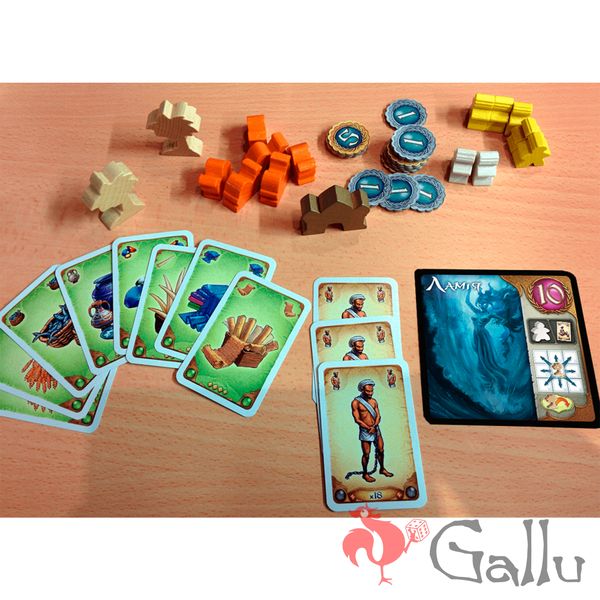
Each tribe follows distinct mechanics: Assassins (red meeples) eliminate figures from the board or players’ reserves; Elders (white meeples) let you buy djinn cards for ongoing perks; Builders (blue meeples) fill your purse with gold coins (doubling as victory points and currency for turn-order bids); and Viziers (yellow meeples) award victory points based on dominance—the more rivals you outnumber in sultan’s servants, the bigger your haul.
Merchants (green meeples) tie into a favorite mechanic of designer Bruno Cathala: set collection, here as market goods. Three unique goods net you 7 victory points at game’s end; nine yield a whopping 60. Some goods are rare (two per deck), others common (five per deck). Collecting all nine is a tall order, especially when rivals delight in snatching ivory or gems from under your nose.
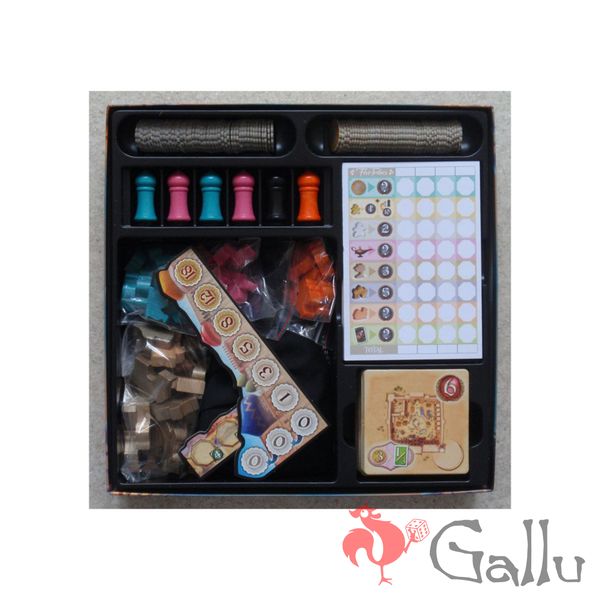
Another captivating mechanic woven into the game is turn-order bidding. Players take turns paying coins to claim a spot on the turn-order track. Shell out 18 coins, and you’re guaranteed to go first. But is 5 coins worth it if you might still end up last—or go first while others pay nothing? Coins are victory points, and games often hinge on a razor-thin margin of a few points. Ready to test your greed?
“Five Tribes” excels in scalability, with rules tweaking for 2 versus 3-4 players. Trust us—two-player games gain extra depth, as each round grants both players two turns, doubling the maneuvers and combos.