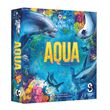
Azulejos—traditionally white and blue ceramic tiles—were brought by the Moors and adopted by the Portuguese after King Manuel I visited the Alhambra palace in southern Spain, captivated by the stunning beauty of Moorish decorative tiles. Awestruck by the Alhambra’s interior splendor, the king immediately ordered his own palace in Portugal to be adorned with similar wall tiles.
About the Board Game "Azul"
This is an exquisite abstract strategy game that casts you as a mosaic artist tasked with decorating the walls of the Royal Palace. With quick sessions, simple rules, and engaging gameplay, it’s perfect for family evenings and playing with kids thanks to its lack of direct conflict (each player has their own board).
"Azul" currently ranks in the Top 100 board games of all time, holds the #2 spot among abstracts, and is in the Top 20 family games on BoardGameGeek. It has also earned numerous awards and nominations at global competitions like Golden Geek, Spiel des Jahres, and many others.
Gameplay of "Azul"
The game sets up quickly. Each player receives a personal board. Factory discs are laid out on the table, and the first player randomly draws tiles from a bag to fill them.
The game unfolds over several rounds, each consisting of three phases:
Factory Offer
Starting with the first player and proceeding clockwise, players can take one of two actions:
- Take all tiles of one color from any disc, then move the unused tiles from that disc to the center of the table.
- Take all tiles of one color from the center of the table. If you’re the first player in the round to take tiles from the center, also claim the first-player marker.
Tiles are immediately placed on one of the five pattern lines on your personal board. Each line can only hold tiles of a single color. If you take more tiles than a chosen line can hold, excess tiles must go to the floor line, costing you points in the wall-tiling phase.
Wall Tiling
Starting from the top pattern line, all players simultaneously move the rightmost tile of each completed line to the corresponding row on their wall board, matching the color section. Then, all tiles from pattern lines without a tile in the rightmost slot are discarded to the box, while incomplete lines remain on the board.
Players immediately score points for adjacent tiles in horizontal and vertical rows. At the end of this phase, points are deducted for tiles on the floor line, and those tiles are then discarded.
Preparation for the Next Round
The first player draws four tiles from the bag and places them on the discs. If the bag is empty, refill it with all tiles from the discard pile, then continue filling the discs.
Endgame and Scoring
The game ends immediately after the wall-tiling phase in which at least one player completes at least one horizontal wall row of 5 tiles.
At the end, earn bonus points for these achievements:
- Gain 2 points for each completed horizontal row of 5 tiles.
- Gain 7 points for each completed vertical column of 5 tiles.
- Gain 10 points for every set of five tiles of the same color placed on your wall.
The player with the most points wins.

We recommend watching the video rules in the “Video” section and, if desired, diving into the detailed PDF rules with illustrations in the “Files” section.
One Last Note
If you’re seeking a versatile board game that anyone can enjoy—literally anyone—with quick, engaging sessions and rules a child can grasp in 5 minutes, Gallu the Rooster suggests giving "Azul" a try.
We also recommend checking out another captivating abstract board game for two—"Patchwork: Ukrainian Folklore". In this game, you’ll step into the role of quilt-makers crafting a patchwork blanket inspired by Ukrainian folk traditions.