


|
Quantity
|
Out of stock
|
||
|
|
|||
|
|
|||
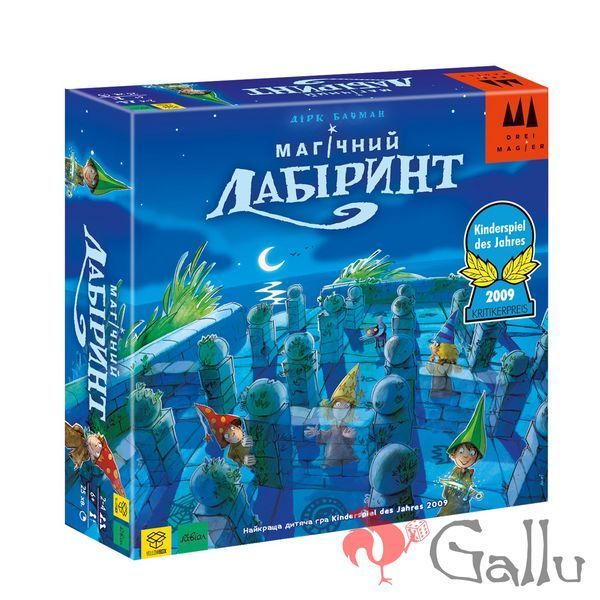
Bam! Ouch! The little wizard rubs his eyes in surprise. What’s that? A wall?!
Curious little wizards explore the magical labyrinth. Today they have a very important task — to find the magic symbols! It would be quite simple if the adult wizards didn’t love playing pranks on the kids. As if by magic, all the exits suddenly closed. In their place, secret tunnels appeared everywhere.
“Magic Labyrinth” is a wonderful family board game where, despite the simplicity of the idea, you get a real sense of small-scale magic during play. Invisible walls, the characteristic clink of a falling ball, and genuine joy when you reach your goal, avoiding danger and beating the other players. Good memory and attention — that’s what will let you almost flawlessly choose the right path to the desired artifact.
Gameplay
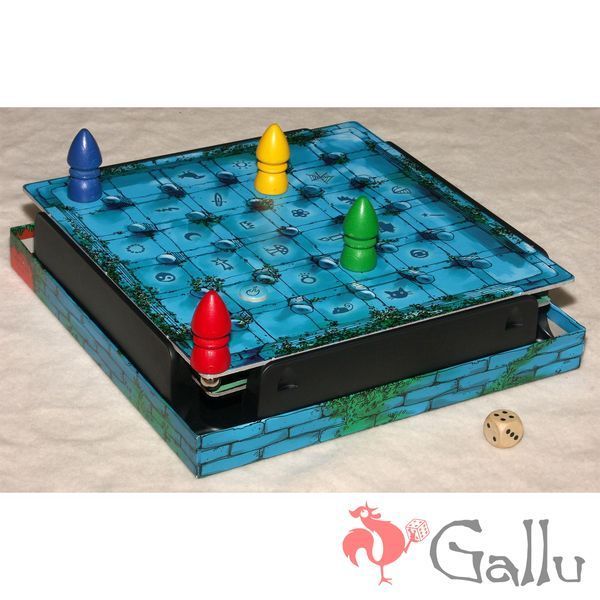
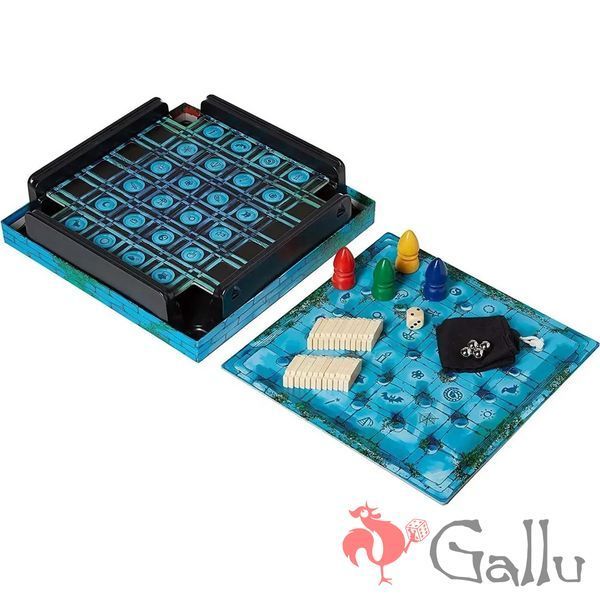
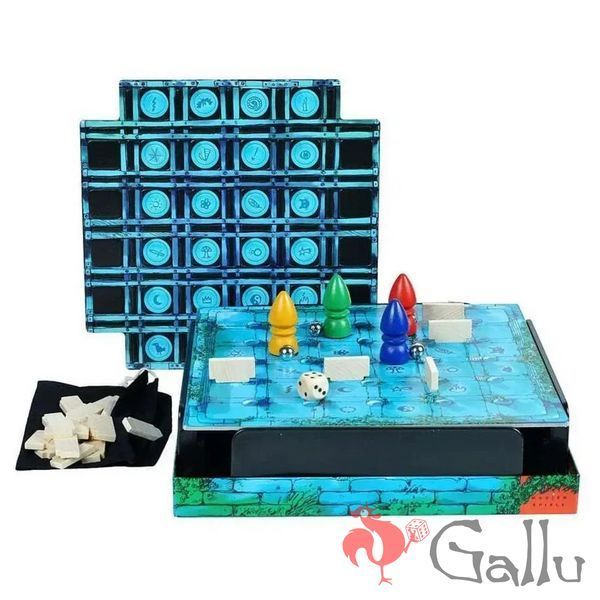
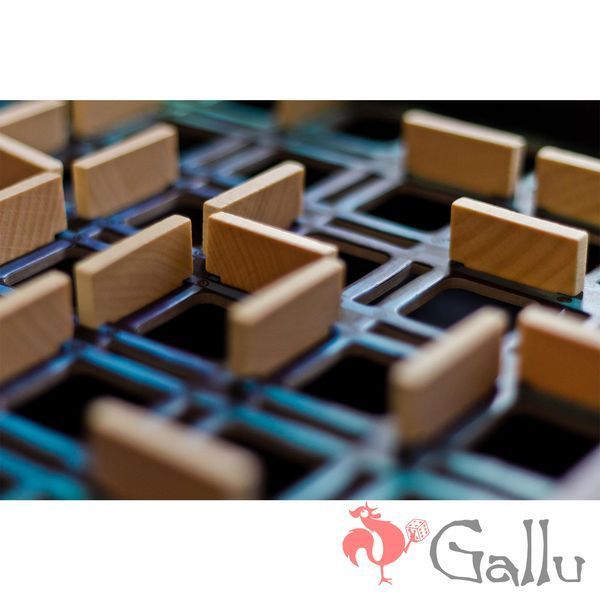
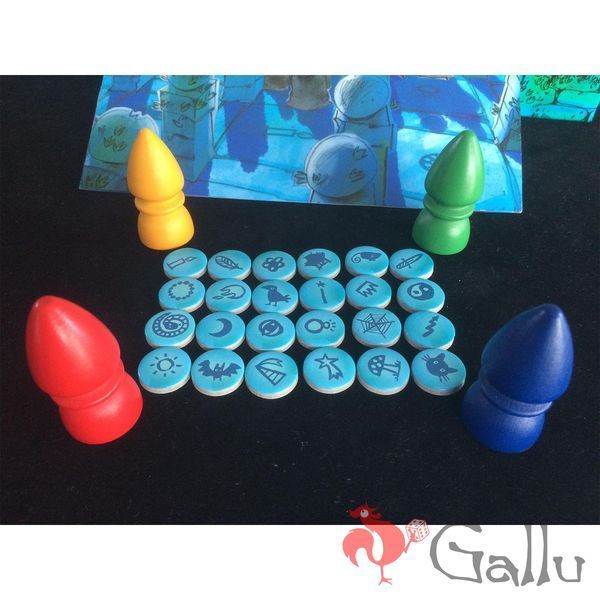
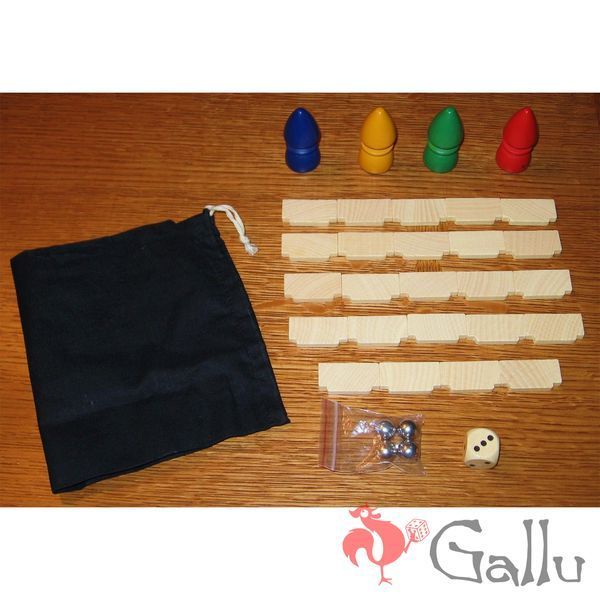
The underground labyrinth is a grid onto which wooden wall partitions are placed before the game begins. From above, the labyrinth is invisible: it’s completely covered by the game board with artifacts drawn on it. Each round, one of the artifact tokens is played. The player who first reaches the image of the required artifact on the board takes that token for themselves. Collect five artifacts — and victory is yours.
Under each little wizard figure there is a magnet. When a player places the figure on the board, they attach a metal ball to it from below — it is this ball that travels through the underground labyrinth. The number of steps the wizard can take per turn is determined by a die roll. The figure can move in any direction except diagonally.
If the wizard hits an “invisible wall” (a wall of the underground labyrinth), the ball won’t stay on the magnet, falls inside the box, and rolls to one of the corners of the playing field where it can be retrieved. After such a failure, the player starts the path again from their starting position.
At the beginning of the game, players determine the direction of movement relying solely on intuition. If they hit a wall — they have to start over, but now attentive players already know where the path is blocked. Gradually, a map of the labyrinth forms in your head: quite accurate and detailed near the starting point (because you pass through here many times), and quite blurry on the rest of the field.
We also recommend watching the video rules in the “Video” section and, if desired, studying the rules with illustrations in PDF format in the “Files” section.
One Last Thing
Galu the Rooster is confident that “Magic Labyrinth” will be interesting for both children and parents, and the fast-paced games and straightforward gameplay will give you unforgettable family leisure moments.
We also recommend paying attention to another very interesting children’s game — “Where’s my CABBAGE?”. The goal of the game is quite simple. The gardeners win if they catch both rabbits before they eat 9 cabbages. And the rabbits, in turn, win if one of them eats the ninth cabbage and at least one rabbit isn’t caught.