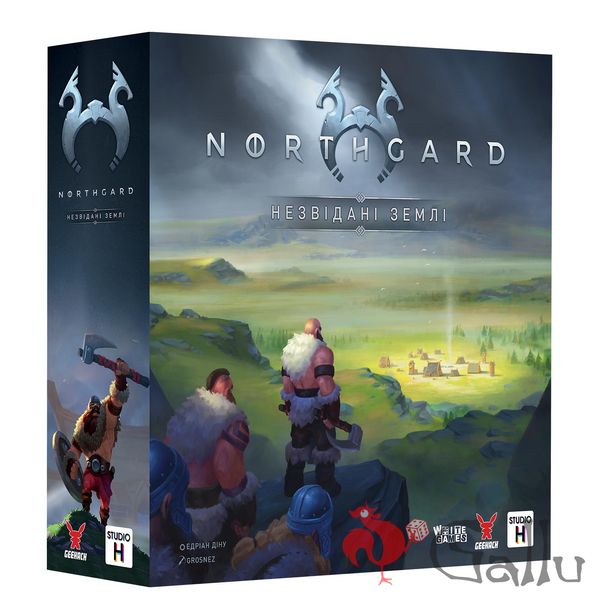
Rumors have reached your lands of new, rich territories beyond the sea. Hoping to gain fame and solidify their power, clan leaders send their bravest warriors to explore those distant shores… and claim the uncharted lands of Northgard.
In this game, you become leaders of asymmetric clans from the universe of the popular video game *Northgard*. Using your personal deck of cards, you’ll strive to improve your people’s fate. Your decisions will determine whether you can triumph in this fierce struggle for new lands, glory, and wealth.
About the Board Game Northgard: Uncharted Lands
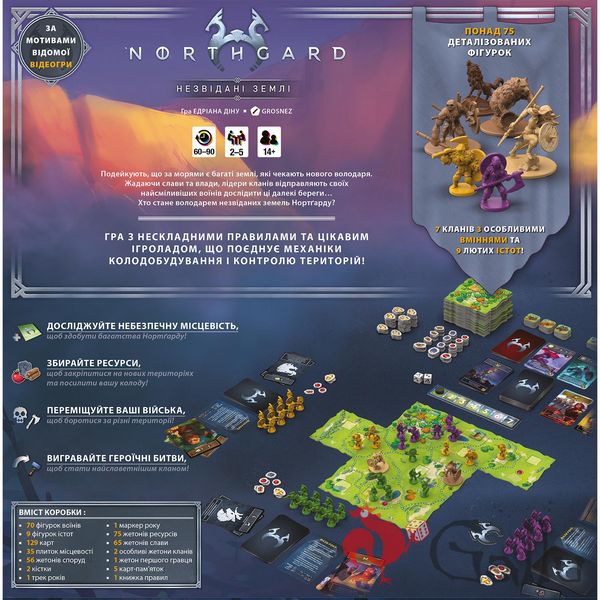
This is an immersive 4X strategy game with straightforward rules and engaging gameplay, blending deck-building mechanics with area control.
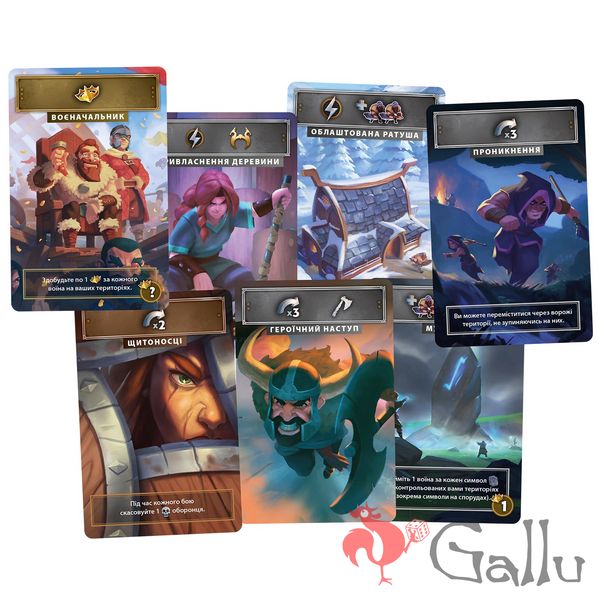
Each player commands their own clan. By directing your clan’s warriors, you’ll explore and seize new territories, clash with rival clans, and hunt various creatures. All actions are performed using cards from your personal deck. At the end of each turn, players select a new card to enhance their deck and devise fresh tactical ploys.
Game Setup
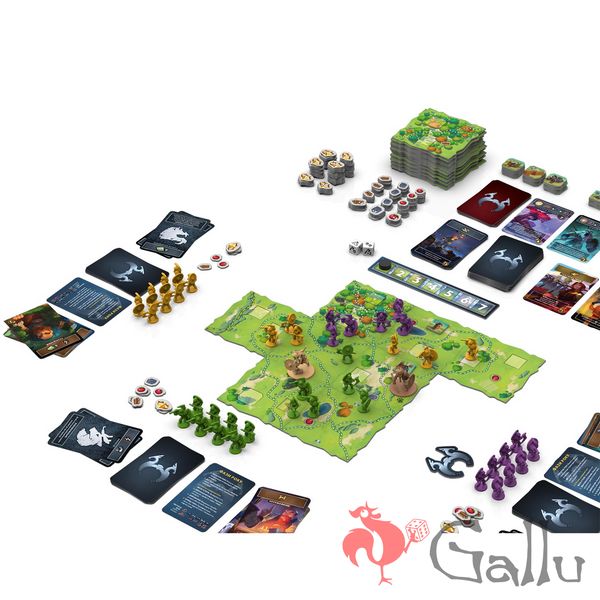
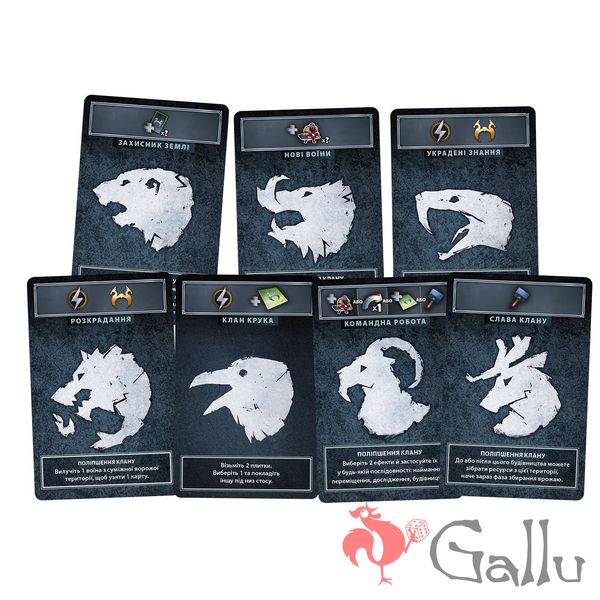
Each player takes a starting deck and Viking figures in their chosen color. Then, everyone picks a preferred clan from 7 asymmetric clans, shuffling the clan card into their deck and placing 2 clan upgrade cards beside them. Each player also receives 2 resources: wood and food.
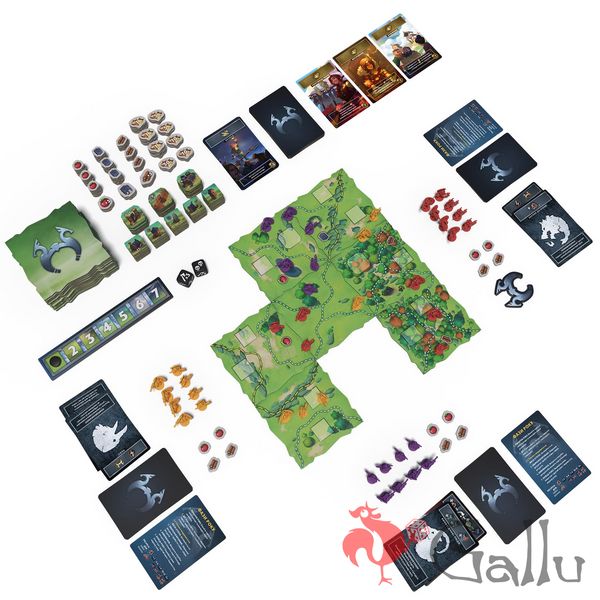
A starting terrain tile is placed in the center of the table. Each player draws 3 terrain tiles from the stack and, starting with the first player, places 1 tile and 3 Viking figures on it. Each player may place only 2 tiles and 6 warriors total. During setup, battles (two players’ figures on one tile), clan abilities, and victory points for enclosed territories are off-limits—this is just prep; the real fun lies ahead.
To wrap up setup, form a development card deck based on the player count (these cards will upgrade your deck during the game) and place the year marker on the “1” spot of the round track.
Phases of a Year
One game year is split into 5 phases, during which you’ll explore Northgard’s uncharted lands, gather resources, recruit bearded Vikings, build, and fight—because what’s a Norse mythology game without battles?
1. Start of the Year
Each player draws 4 cards from their deck, and development cards equal to the number of players are laid out on the table.
2. Actions
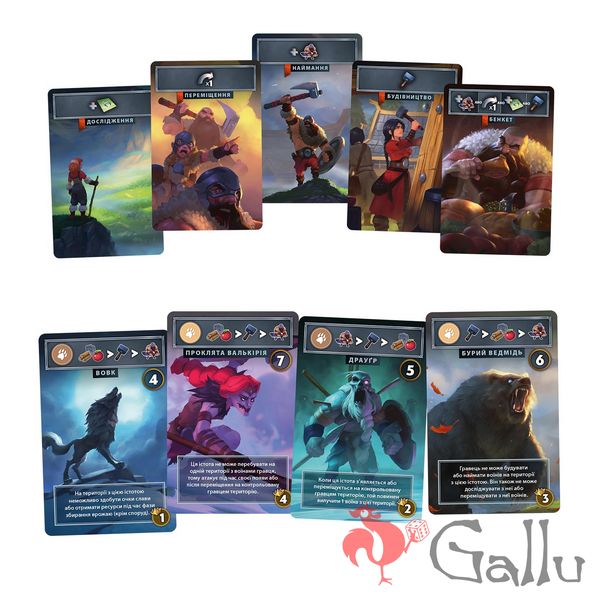
This is the most expansive phase, where you take turns playing cards from your hand into your play area, triggering effects like recruiting troops, building, exploring, moving, and using special clan or development card abilities.
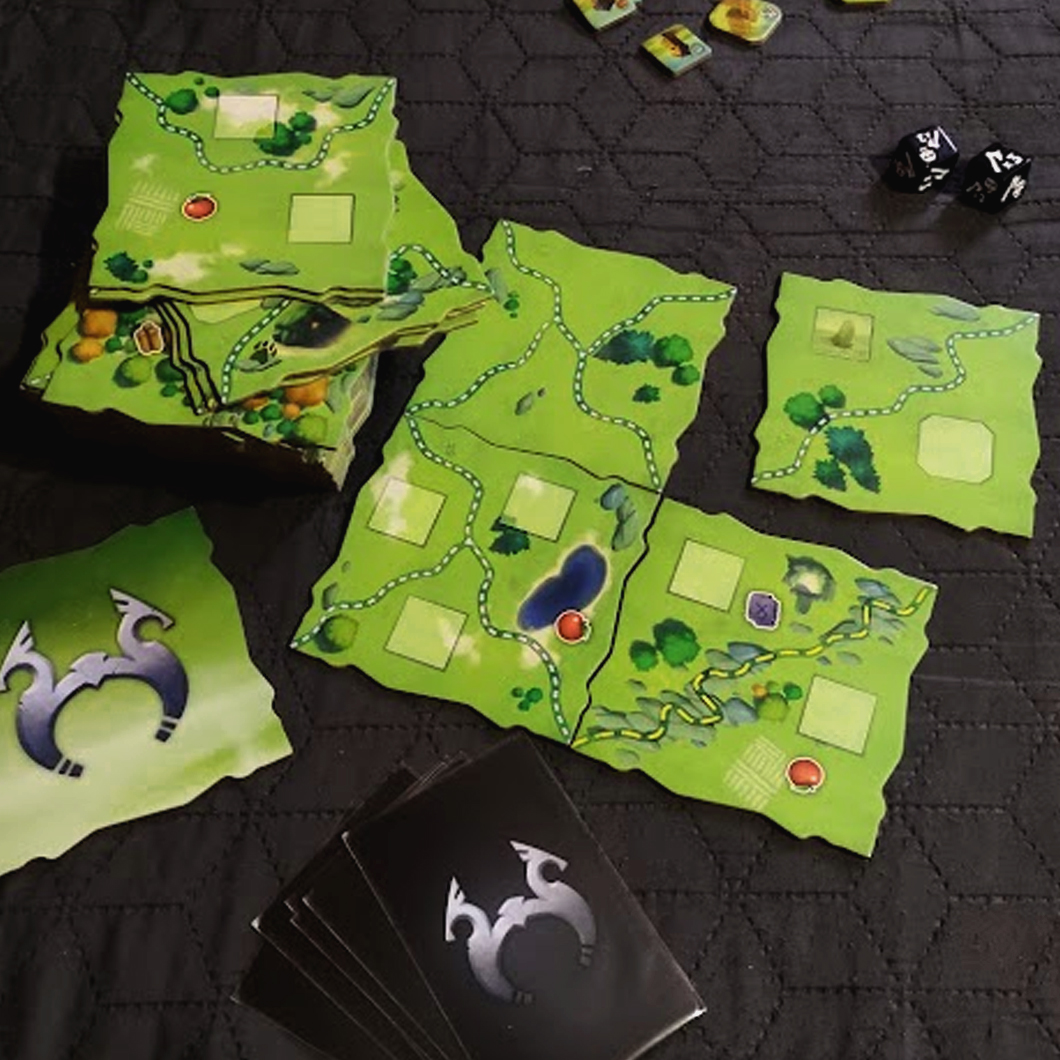
Beyond playing cards, you can place a card in your play area without using its effect and wait (skip your turn), swap a card by taking a new one from your deck for 1 knowledge (rune), or upgrade your deck by buying a clan upgrade for 3 knowledge (it goes straight to your hand). You can also thin your deck by removing a card from your hand to the box and drawing two from your deck for 2 knowledge, or pass by discarding your hand.
The phase continues until everyone passes. Playing your last card forces an automatic pass next turn. The first to pass becomes the first player and picks a development card from those available, placing it on top of their deck. The last to pass takes the final development card of the round. At the end, all cards in the play area go to the discard pile.
As in most deck-builders, if your deck runs out and you need a card, shuffle your discard pile to form a new deck. Galu the Rooster wants to clarify upfront to avoid confusion in your first games: cards played this round don’t go to the discard pile immediately—they stay in the play area. So, draw from your deck; if it’s empty, shuffle the discard pile. If all cards are in play, you can’t draw.
3. Harvest
In this phase, you collect resources marked on tiles and buildings in territories you control (where your warriors are). Gain victory points for each enclosed territory (fully surrounded by borders). You can also trade resources with the bank at a 3:1 rate.
4. Wintering
Pay resources equal to the number of warrior figures you have. A handy ratio table is printed on the player aid and in the rulebook.
5. End of the Year
This final phase checks the endgame condition (optional) and moves the year marker to the next round. If it’s the final year, the winner is determined. The rules also offer a 10-year variant, ignoring the instant-win condition.
Game End Conditions
- If a player controls 3 large enclosed territories, each with a large building, they win instantly.
- At the end of the 7th round, players tally victory points. The highest score wins.
Card Effects and Combat Basics
Explore Action
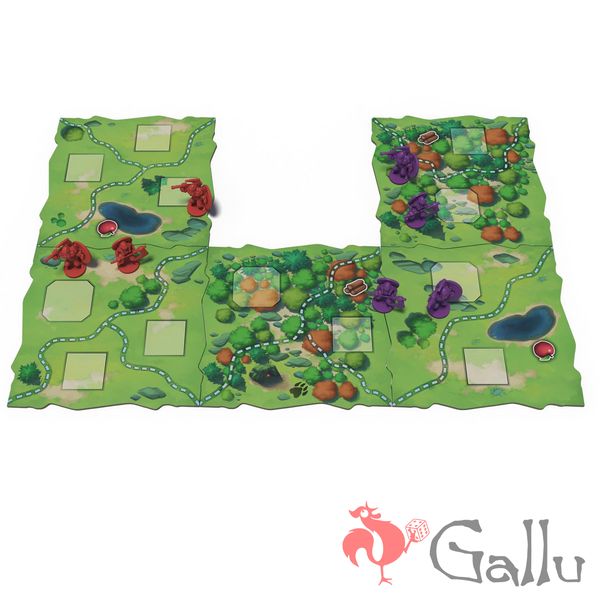
Playing this action lets you take the top tile from the terrain stack and place it on the table. Placement rules: it must connect to an open, controlled territory, borders can’t be broken, and diagonal placement is forbidden.
Build Action
With a build effect card, construct a building on your territory in the matching tile slots (large or small). You can’t build two buildings with the same effect on one territory. Buildings come in two types: small (1 wood) and large (3 wood). Special rune stone slots on tiles are for rune stones only.
Recruit Action
This action places a warrior figure on your territory. There’s no limit to figures per territory.
Move Action
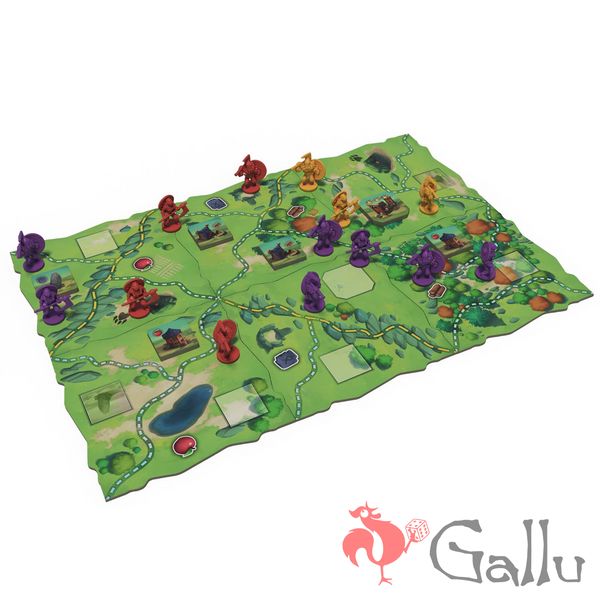
This action moves warrior figures between territories and can start combat. Move any number of warriors at once from one territory to another. If the border is yellow (rough terrain), it takes 2 moves (not two cards—your card needs a “2”). Moving onto an enemy territory triggers combat.
Combat
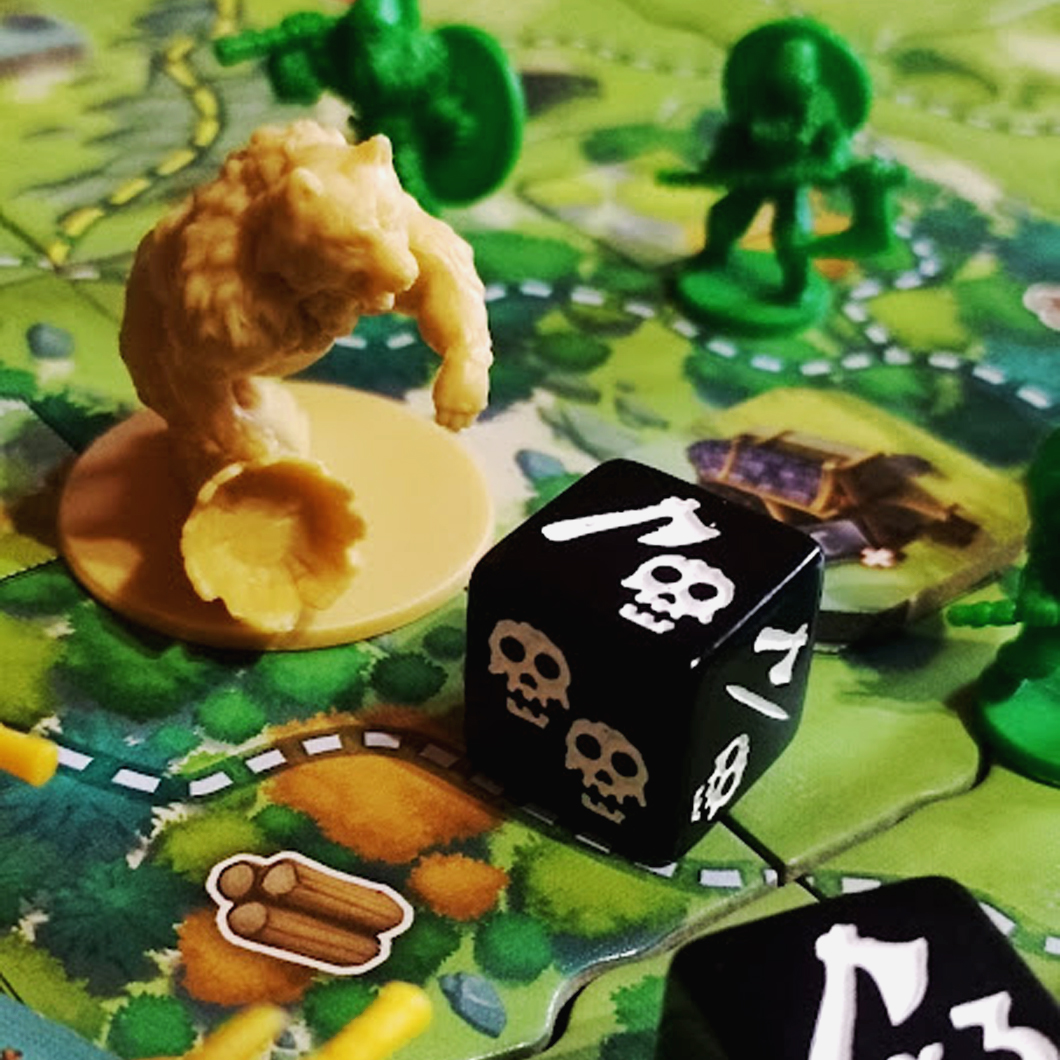
Combat outcomes depend on:
- Number of fighters;
- Bonuses from cards, buildings, clans, etc.;
- Food discarded (a fed Viking fights as two);
- Dice roll results.
No math degree needed—it’s simple. Each warrior provides one axe symbol. Each food spent adds one axe (max equal to warriors). Add card/building bonuses, then roll dice.
First, check losses (skull symbols), then determine the winner. The side with more axes wins; ties favor the defender. If skulls equal the enemy’s warriors, combat ends early without counting axes.
The winner claims the territory; the loser must retreat to adjacent controlled or neutral territories, but not across yellow borders. If there’s nowhere to retreat, all warriors are lost.
Creatures Module
This optional module adds complexity and atmosphere. When exploring with the explore action, you might reveal a terrain tile with a beast cave. Draw a monster card, and place its figure on the cave territory.
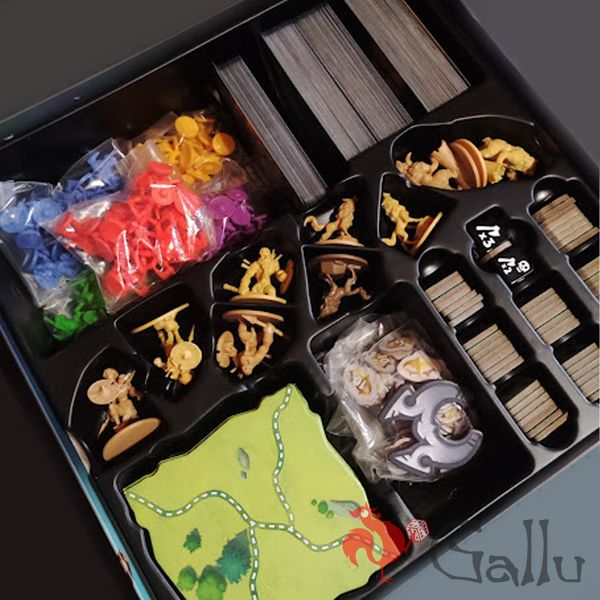
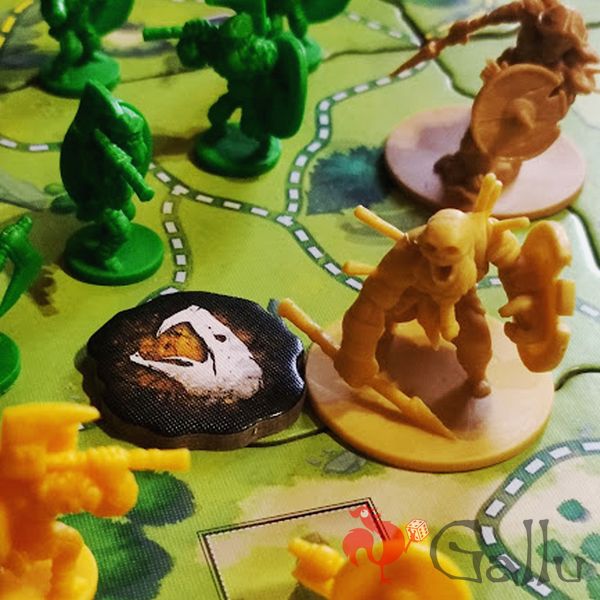
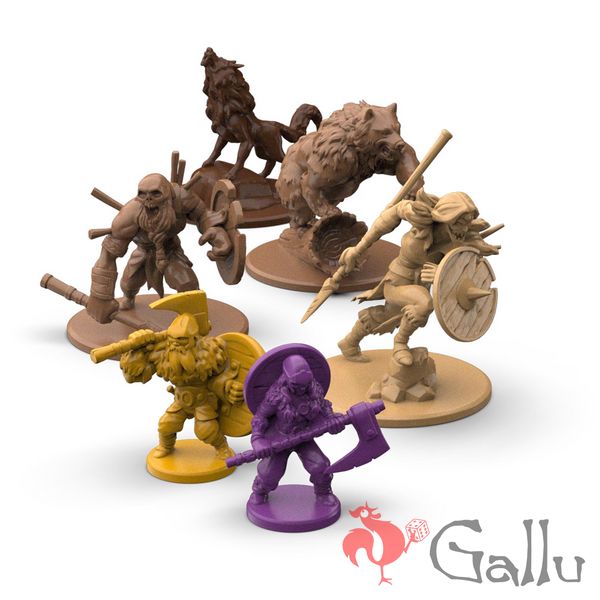
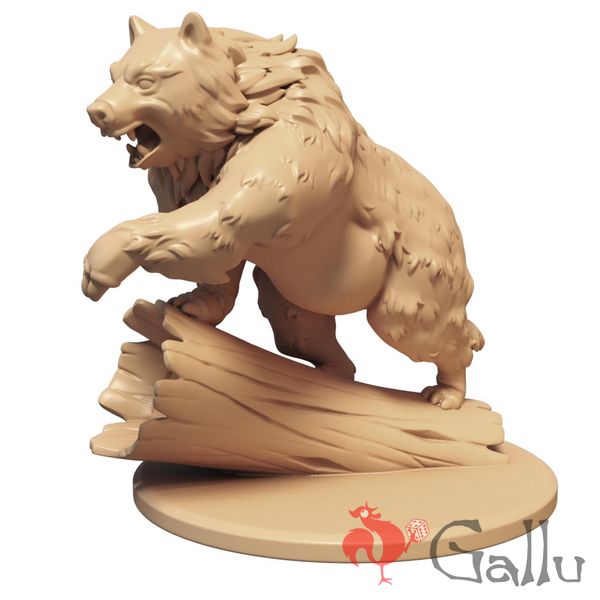
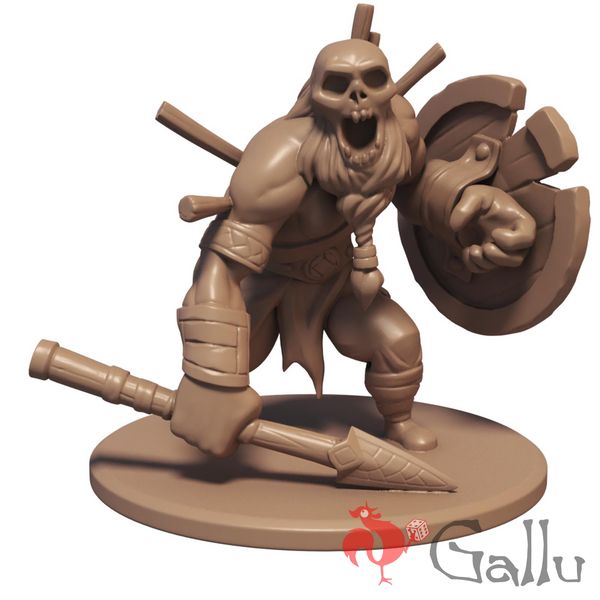
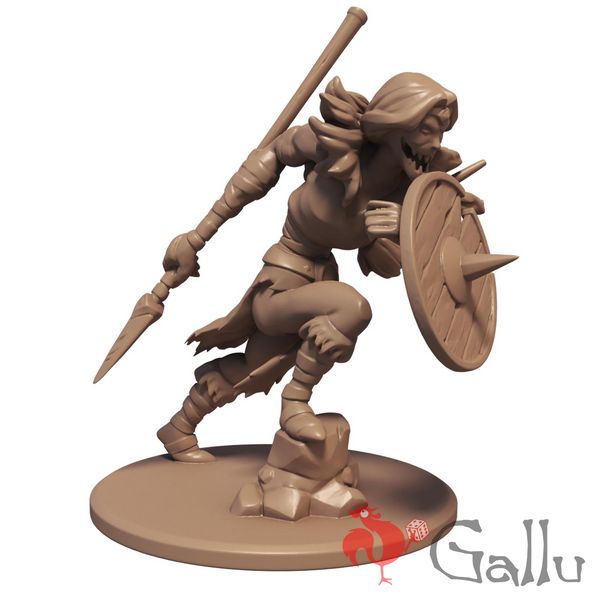
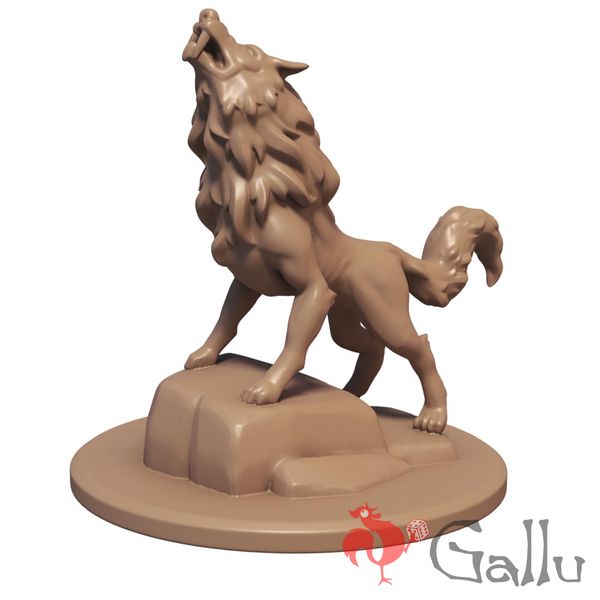
The base game includes 9 monster figures of 4 types: Draugr, giant wolves, bears, and cursed Valkyries—each with unique effects, combat strength (axe symbols), and movement priorities. After one game with this module, you won’t want to play without it.

We recommend watching the video rules in the “Video” section and, if desired, exploring the illustrated PDF rules in more detail in the “Files” section.
One Last Note
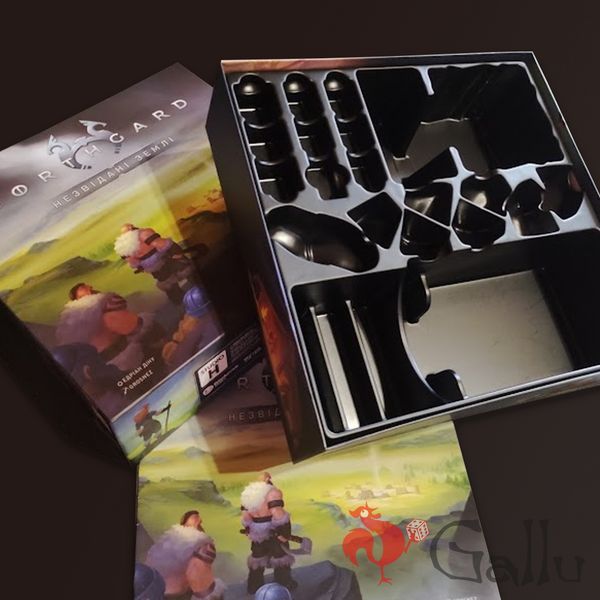
This strategic board game "Northgard: Uncharted Lands" has nearly every mechanic imaginable—except worker placement. Don’t let that bother you! Gallu the Rooster was pleasantly surprised by how seamlessly they blend. Plus, the box includes a quality organizer that fits sleeved cards, with room left for expansions we’re eagerly awaiting.
If you crave more direct combat, try the wargame "Blood Rage", also rooted in Norse mythology.